|
LSH-Core
Deterministic firmware core for Controllino-based Labo Smart Home nodes
|
|

| |
|
LSH-Core
Deterministic firmware core for Controllino-based Labo Smart Home nodes
|
|
|
| |
Globally stores all clickables (like buttons) and to operates over them. More...
Functions | |
| auto | getId (uint8_t clickableIndex) -> uint8_t |
| Return the static wire ID for one registered clickable index. | |
| auto | getClickable (uint8_t clickableId) -> Clickable * |
| Get a single clickable. | |
| auto | getIndex (uint8_t clickableId) -> uint8_t |
| Get a single clickable index (in device vector of clickable). | |
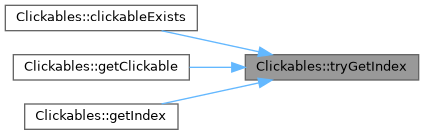
| auto | tryGetIndex (uint8_t clickableId, uint8_t &clickableIndex) -> bool |
| Resolves a clickable ID to its dense runtime index with a single map lookup. | |
| auto | clickableExists (uint8_t clickableId) -> bool |
| Get if the clickable actually exists. | |
| void | finalizeSetup () |
| Validate the configured clickable table before runtime checks start. | |
Globally stores all clickables (like buttons) and to operates over them.
| auto Clickables::clickableExists | ( | uint8_t | clickableId | ) | -> bool |
Get if the clickable actually exists.
| clickableId | Unique ID of the clickable. |

| void Clickables::finalizeSetup | ( | ) |
Validate the configured clickable table before runtime checks start.
Click actions are generated as static dispatch code, so setup only has to validate the dense object table and ensure every clickable has at least one executable action.


| auto Clickables::getClickable | ( | uint8_t | clickableId | ) | -> Clickable * |
Get a single clickable.
| clickableId | clickable UUID. |

| auto Clickables::getId | ( | uint8_t | clickableIndex | ) | -> uint8_t |
Return the static wire ID for one registered clickable index.
| clickableIndex | dense runtime clickable index. |

| auto Clickables::getIndex | ( | uint8_t | clickableId | ) | -> uint8_t |
Get a single clickable index (in device vector of clickable).
| clickableId | clickable UUID. |

| auto Clickables::tryGetIndex | ( | uint8_t | clickableId, |
| uint8_t & | clickableIndex | ||
| ) | -> bool |
Resolves a clickable ID to its dense runtime index with a single map lookup.
| clickableId | Clickable UUID. |
| clickableIndex | Output runtime index when the ID exists. |
 1.9.8
1.9.8